

We use cookies to improve the quality of your experience on this website. By continuing to browse the website, you agree to our use of cookies. To change settings, please read our policy.
Premium-quality hot-briquetted iron (iron ore briquettes) with a particle size of 4 to 25 mm
In terms of chemical properties, the product differs from Premium-quality and High-quality hot-briquetted iron (iron ore briquettes) in having a lower total iron and metallic iron content, as well as in the physical dimensions of the briquettes.
It can be used as a raw material and as a component of the burden for electric arc furnaces or in blast furnace production.
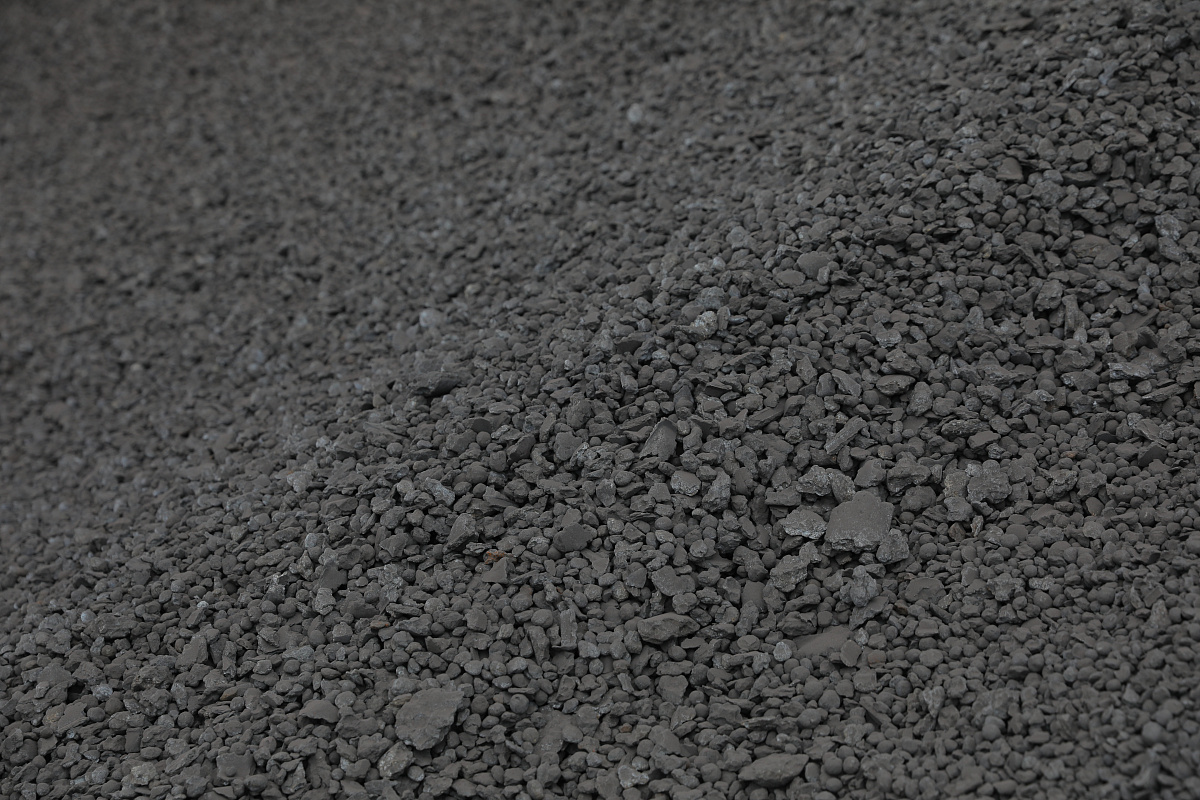
The final dimensions and characteristics are agreed with the customer individually
General information
| Enterprise | Lebedinsky GOK |
| Normative document name | TU 24.10.13-011-00186803-2020 |
| Weight content of reference grain size lower than 6.35 mm, % (when transported by water) | 5.0 |
| Weight content of reference grain size lower than 4 mm, % (when transported by means of transport other than water) | 8.0 |
| Distinctive characteristics and properties |
During the oxidation process, HBI absorbs oxygen, which may make the atmosphere in the premises hazardous for people entering the area. In the presence of moisture during open-air storage, HBI oxidizes and may-self heat to temperatures of up to 120°C, releasing steam and hydrogen gas. HBI may ignite when exposed to open flames or molten metal droplets, when in contact with heated materials or flammable substances, or when wetted with seawater. |
| Industrial applications | Steel industry |
| Area of application | Steelmaking |
| Сharacteristic | Value |
|---|---|
| Fe total content (%) |
87.0
|
| Fe metallic content (%) |
75.0
|
| S content (%) |
0.02
|
| P content (%) |
0.015
|
| SiO2 content (%) |
4.8
|
| C content (%) |
0.8
|
Packaging and marking
Packaging
None
Marking
None
Storage, transportation, delivery conditions
| Minimum order | The quantity of each shipment shall be determined by mutual agreement between the parties. |
| Transportation requirements | HBI shall be transported by all means of transport in accordance with the transportation regulations applicable to each specific transport, including requirements concerning packaging and labelling. The material shall be transported under conditions that prevent contamination and mixing with other materials, as well as cargo spillage and, in the case of waterborne transportation, moisture ingress. When HBI is transported in bulk by water, the holds shall be watertight. |
| Storage requirements |
Storage areas for HBI shall have a solid, non-combustible surface free of depressions where water may accumulate. Foreign objects and materials must not be allowed to enter the stockpile of HBI. The movement of any bulk materials over the stockpile is prohibited, as is the storage of fine-grained (dust-forming) materials or the location of heat sources in close proximity to HBI storage areas. HBI must not be exposed to open flames, electric or gas welding, contact with objects having a temperature exceeding 65°C, electrical busbars, molten metal, or seawater. HBI shall be stored under conditions that prevent contamination and mixing with other materials. |
| Note |
Under the International Maritime Solid Bulk Cargoes (IMSBC) Code, HBI is classified as a Group B cargo (cargoes possessing chemical hazards). When stored in an open stockpile, the metallic iron content may decrease by an average of up to 7% per month, regardless of the amount of precipitation or the size of the stockpile. The handling procedures for HBI shall ensure that damage to the material is kept to a minimum. A magnetic grab shall be used during HBI loading and unloading operations. In seaports, dropping the material from a height of no more than 1.0 m is permitted. |